Case study · Cultural
A museum, seen before it was built.
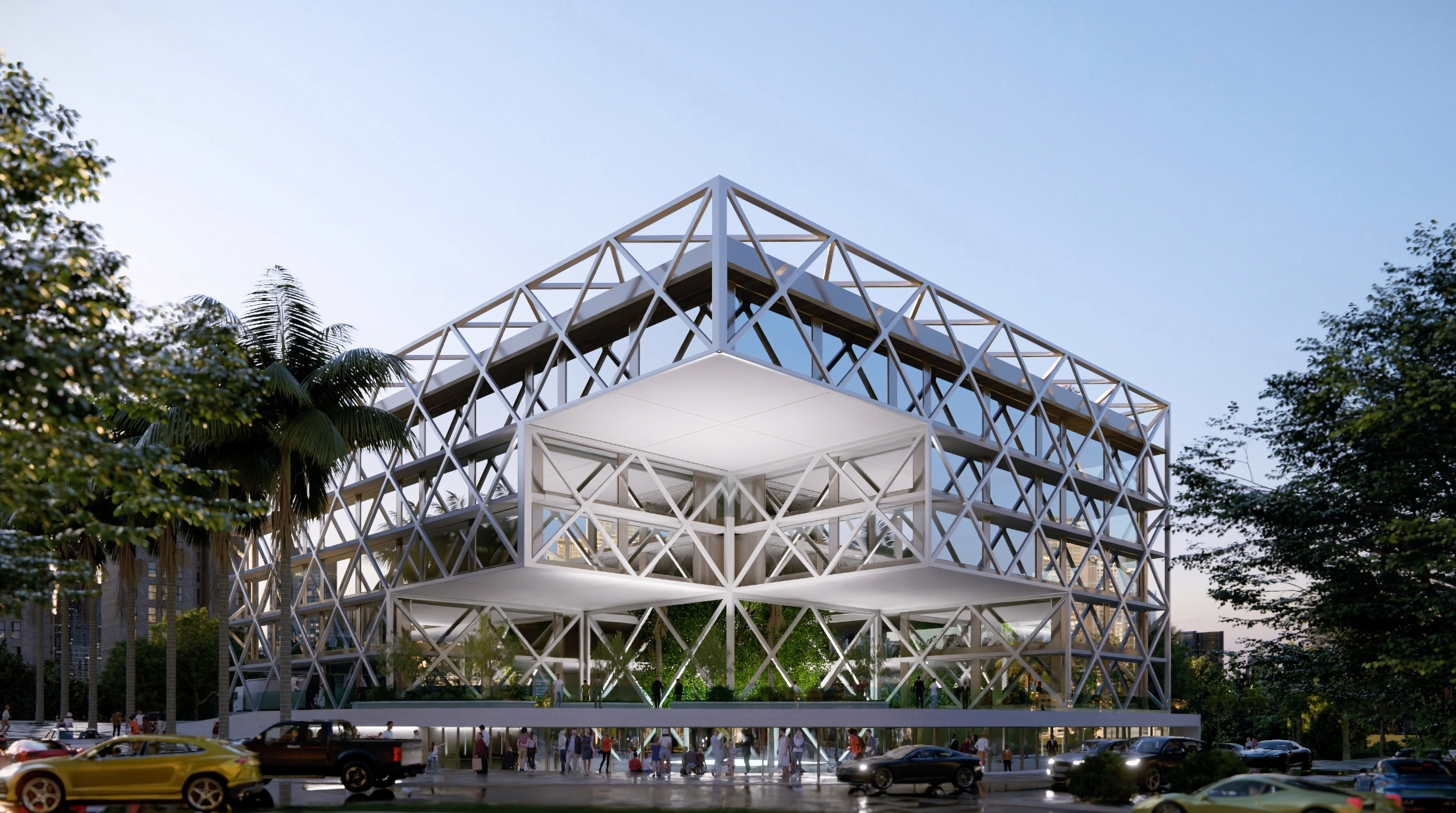
A photorealistic blue-hour visualization of a contemporary art museum — its diamond-lattice steel structure rising above the city skyline. The goal: turn an early design into a single image convincing enough to carry a competition and a public conversation.
Making a bold geometry read as architecture
A diamond-lattice steel structure is striking on paper, but easy to render as an abstract pattern that loses its scale and depth. The brief was to show the building as a real, inhabited landmark — where the lattice frames the sky, the glazed base grounds it in the street, and the whole volume sits convincingly in the city.
Because every image starts from how the building is actually constructed, the structure, proportions and materials had to hold up under scrutiny — not just look pretty from one lucky angle.
From clay study to light
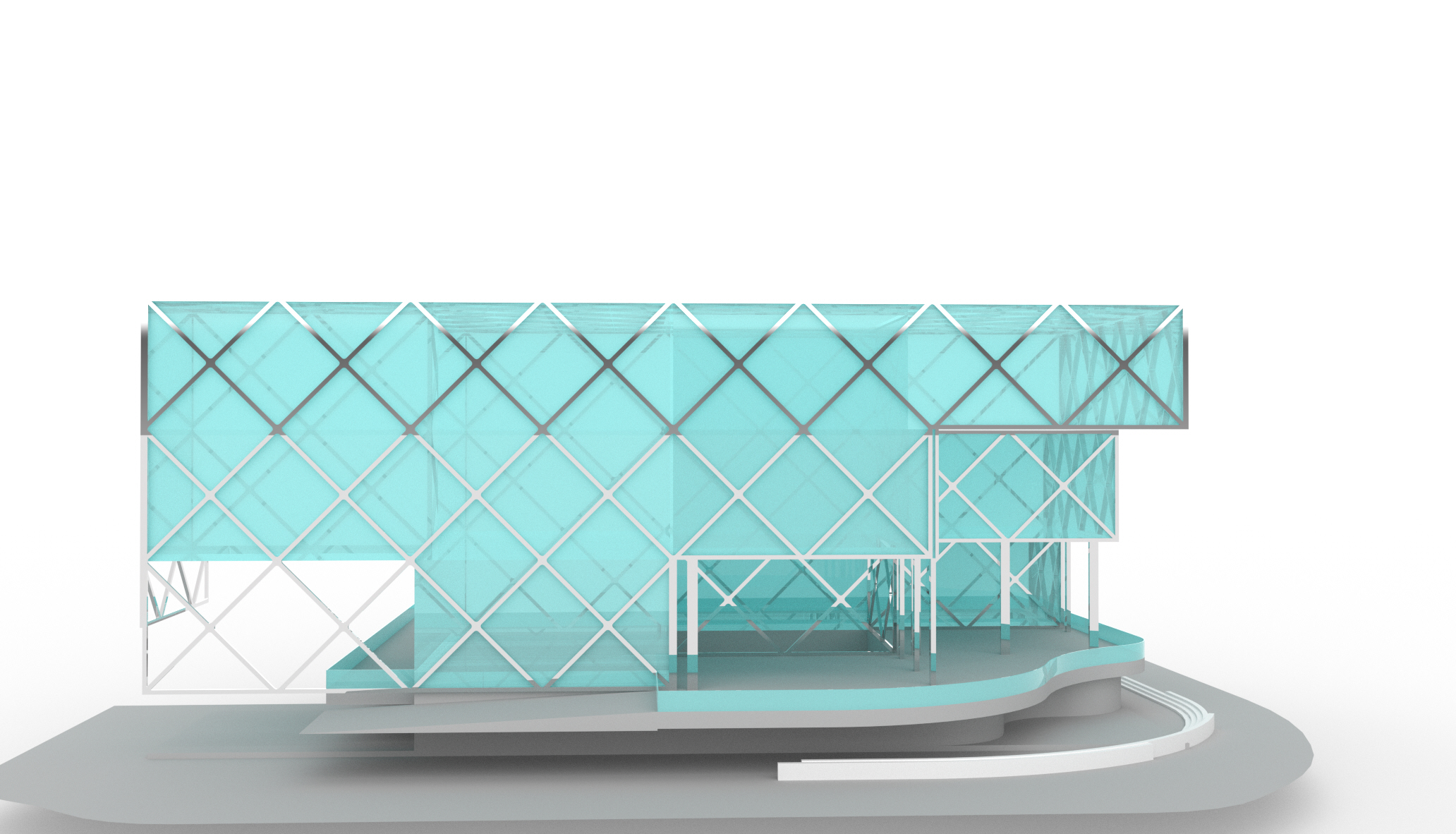
Every image begins as a grayscale clay study — camera, composition and framing locked before a single material or light is added. It is the cheapest place to make the big decisions, and it keeps the final image intentional rather than accidental.
Only once the composition was right did light, materials and atmosphere follow: the blue-hour sky, the warm interior glow, the reflections on the glazed base.
One image that carries the project
The final visualization does what a good render should: it lets people experience the building before it exists — the drama of the lattice against a dusk sky, the human scale of the illuminated base, the sense that this is a place, not a diagram.
It is the kind of image that wins a competition, anchors a launch, or simply helps a design survive its first meeting with a client — delivered in 4K, architecturally accurate, on deadline.
Have a project like this?
Tell me the typology, number of images and your deadline — you'll get a tailored quote within 24 hours.
Get a quote in 24h